Chimp Test
Remember the numbers scattered across the grid, then tap them in order after they disappear.
Settings
Changing one restarts the attempt, and scores set under different settings are not comparable.
Quick start
- 1Choose when the numbers hide, or leave it on your first tap.
- 2Click Start. Numbers appear scattered across the grid.
- 3Tap 1. The rest turn into blank tiles at that moment.
- 4Tap the blanks in order: 2, then 3, and up as far as you can.
- 5Clear the board and one more number is added. Three misses end the run.
Loading test
How you compare
Numbers held (numerals). Higher is better. Reference distribution, not CognitiveDrill data.
The median for this test is 8 numerals. Take a run and your score appears on the bar.
Reference distribution, not CognitiveDrill data. It is shaped to match published results for this task and is replaced by our own norms once a cohort reaches n = 1,000. Shape based on: Inoue S, Matsuzawa T; Cowan N.
Try next
About this test
A five-year-old chimp and a row of numbers
In 2007 Sana Inoue and Tetsuro Matsuzawa set young chimpanzees and university students the same task. Numbers flashed on a screen, turned to white squares, and both had to tap them in order. A five-year-old chimpanzee named Ayumu did it faster and more accurately than the adults.
That result travelled the world, and this test is the human half of it. Here the numbers stay put until you tap the first one, which is a touch kinder than the version Ayumu faced. The question it asks is the same. Where were the numbers, and in what order did they run.
Why the first tap is a free look
In the standard setting the numbers stay on screen until you tap 1. So that first tap is not a memory test at all. You can see the 1, and you simply hit it.
The memory starts the instant your tap turns the others blank. From then on you are tapping white squares from a picture in your head. That is why a board of eight numbers really asks you to hold seven positions, not eight. For the harder version, the settings can hide every number after a short look instead.
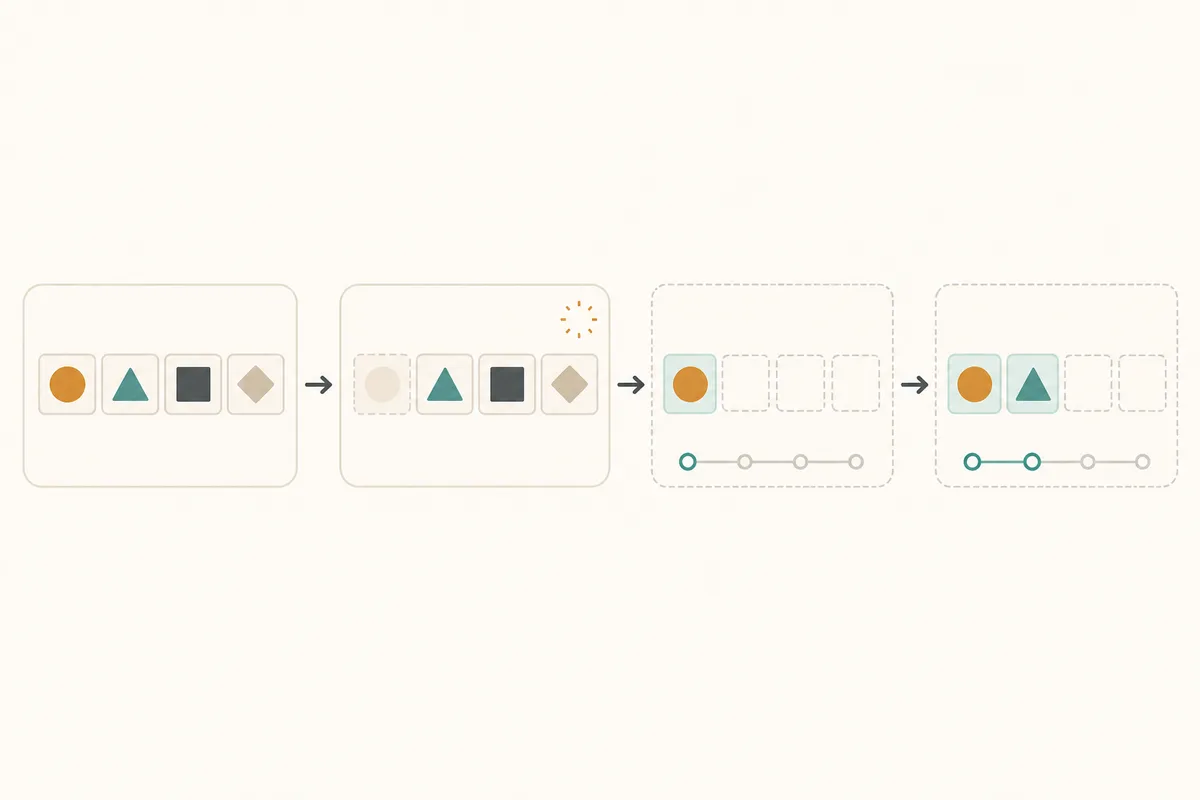
Numbers on a grid, not a sequence played to you
This looks like the other grid tests here, and it measures something none of them do. The sequence memory test plays its squares to you one at a time, so you learn an order as it unfolds. On this test every number is on screen together, and the order is written on their faces.
So the work is spatial and all at once. You take a snapshot of where the numbers sit, then read your own snapshot back in counting order. Getting good at it is mostly about grouping the positions, the same trick that lifts a digit span. How working memory works covers why holding a picture and holding a list are different jobs.
Reading your highest number
A median run reaches about eight numbers. Twelve is a strong score, and much beyond that usually means a practised grouping method rather than a bigger memory. The reference distribution is a model of published work, not our own data yet, so read it as a rough guide.
Your best jumps around, because one slip on a board you knew ends the whole run. Take the highest of several attempts as your number. The test rewards a calm snapshot and a steady pace. A good score does not spread to remembering names, faces or where you left your keys. To place it against the oldest span measure, read what counts as a good digit span.
Questions
What is a good score on the chimp test?
About eight numbers sits in the middle of the reference distribution. Ten is good and twelve or more is strong. Scores set with a different first board, or with the numbers hidden after a look, are not comparable.
Can a chimpanzee really beat a human at this?
At the fast, hidden version, yes. In the 2007 study a young chimpanzee named Ayumu placed the numbers more accurately than adult humans. The self-paced test here is easier than the one he faced.
Why do the numbers turn blank when I tap 1?
That is the test. While the numbers are on screen there is nothing to remember. The task is tapping the blank tiles in order once the numbers are hidden.
Is this the same as the sequence memory test?
No. Sequence memory plays its squares one at a time and asks for that order back. The chimp test shows every number at once and hides them together, so it is a spatial hold rather than a played sequence.
Does a high score mean I have a photographic memory?
No. It means you are quick at snapshotting a handful of positions and good at grouping them. Photographic memory, in the everyday sense, has never held up under a controlled test.
Can I get better with practice?
Yes, mostly by learning to group the positions and to keep a steady pace. That gain is specific to this task and does not carry over to memory in daily life.